By Carlin Felder | Author of The Ultimate Listing Guide
Getting your real estate license is one thing. Knowing how to actually find someone who wants to sell their house, convince them to hire you, price the property correctly, market it, negotiate offers, and get to the closing table is something entirely different.
It’s one of the biggest challenges new real estate agents face.
You pass your licensing exam, join a brokerage, get access to the MLS, order some business cards, and then realize nobody has really shown you how to sell a house from beginning to end.
Maybe you’ve worked with buyers but have never taken a listing. Maybe you’re a part-time real estate agent who wants to sell two or three houses a year. Or perhaps you’ve been licensed for several years and still haven’t figured out how to consistently get seller clients.
I started my real estate career part-time in 2019, transitioned to full-time in 2022, and eventually built a team of 13 agents.
Along the way, I discovered that one of the most valuable things an agent can learn is how to build a business around listings.
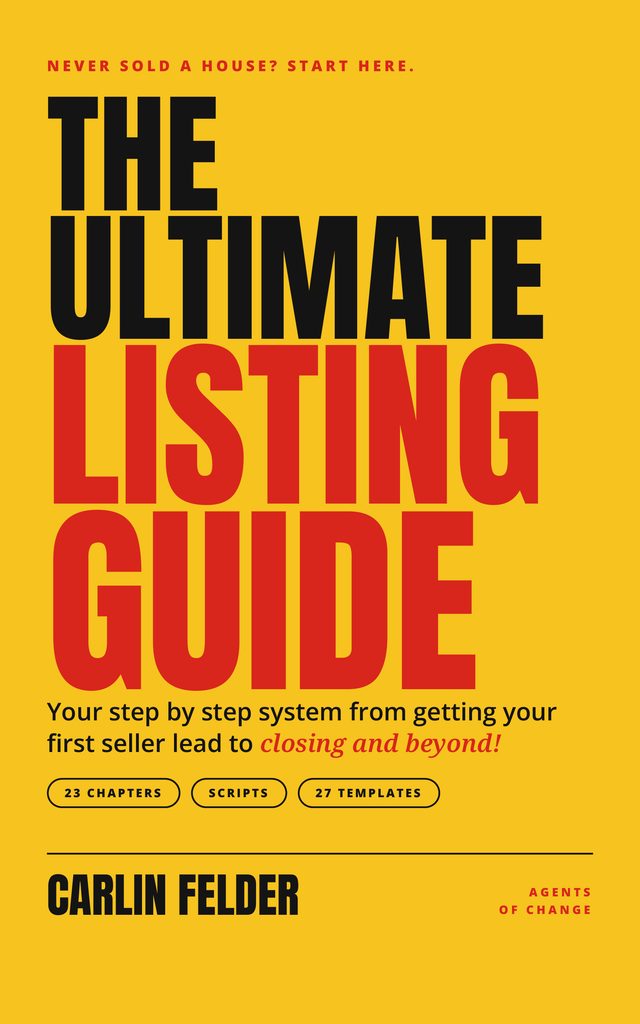
That’s why I wrote The Ultimate Listing Guide: Your Step-by-Step Listing System from First Lead to Closing and Beyond.
The book contains 23 chapters, scripts, and 27 templates to help real estate agents understand the entire listing process.
Here are some of the most important things you need to know if you want to start selling houses.
Get Your Copy of The Ultimate Listing Guide
1. How Do You Get Your First Real Estate Listing?
This is probably one of the most frustrating questions for newly licensed agents.
How do you convince someone to trust you with selling their house when you’ve never sold one before?
The answer starts with understanding where sellers come from.
There are several ways to find homeowners who are thinking about selling:
- Your sphere of influence, including family, friends, former coworkers, and neighbors
- For Sale By Owner properties, commonly called FSBOs
- Expired and withdrawn listings
- Referrals from other real estate agents
- Open houses and neighborhood prospecting
- Local businesses and professional relationships
- Google searches, YouTube videos, and social media
- Homeowners who have specific reasons to move, such as downsizing or relocating
The mistake many new agents make is trying every lead generation strategy at once.
They spend a week cold calling, a week making Instagram Reels, a week mailing postcards, and then decide none of it works.
A better approach is to choose one lead source that fits your personality, schedule, and market and work it consistently.
In The Ultimate Listing Guide, I explain how to evaluate different lead sources, choose one, and create a weekly schedule around it.
You don’t need to become an expert at everything. You need to become good at something that consistently creates conversations with potential sellers.
2. How Do You Find People Who Want to Sell Their House?
Finding sellers is different from finding buyers.
Someone browsing Zillow might be interested in purchasing a house next month, next year, or five years from now.
But homeowners who have already tried selling their properties have given you an indication that they may want to move.
That’s why expired listings, withdrawn listings, and For Sale By Owner properties can be useful sources of seller leads.
An expired listing is a property whose listing agreement ended without the home selling.
A FSBO is a homeowner attempting to sell without hiring a listing agent.
Both situations offer opportunities to provide helpful information, assuming the homeowner is not already represented and your outreach complies with applicable rules.
The key is understanding why the homeowner wants to sell, what they have already tried, and what might help them achieve a different outcome.
You can also develop relationships with homeowners long before they decide to list.
For example, someone who owns a large home and plans to retire might be considering downsizing. A landlord might want to sell an investment property. A family might need assistance selling an inherited home.
Good listing agents learn how to identify opportunities and develop relationships without treating every conversation like a sales pitch.
3. Can You Get Real Estate Listings Without Cold Calling?
Yes.
I know agents who love cold calling, and I know agents who would rather do almost anything else.
The important thing is to build a prospecting system you will actually use.
One of the chapters in my book is dedicated entirely to getting listings without relying on cold calls.
Some alternatives include:
Direct mail: Send useful, targeted letters to homeowners in a geographic area or to sellers whose properties previously failed to sell.
YouTube: Create videos answering local real estate questions, explaining market conditions, and helping homeowners understand the selling process.
Google Business Profile: Build your local online presence so homeowners can discover you when searching for a real estate agent.
Sphere of influence: Stay in touch with people who already know you and make it easy for them to refer you.
Open houses: Meet neighbors who may be considering selling their own homes.
Agent referrals: Develop relationships with agents in other markets who may have clients relocating to your area.
I have personally used local YouTube content and agent relationships to generate real estate business.
These methods take work, but they also allow you to build a business around your strengths rather than forcing yourself into a prospecting style you dislike.
4. How Do You Convince a Seller to List Their House With You?
Getting a listing appointment is only the beginning.
You still have to demonstrate why the homeowner should trust you to represent them.
And that doesn’t mean showing up with a 50-page presentation about how wonderful your brokerage is.
A good listing appointment should answer several important questions:
- What is the seller hoping to accomplish?
- Why are they moving, and when do they need to move?
- What is their home likely worth in the current market?
- What should they do to prepare the property for sale?
- How will you market their home?
- What will selling cost, and what might they receive at closing?
- How will you communicate with them throughout the process?
Before the appointment, research the property, review comparable sales, understand the neighborhood, and prepare a marketing strategy.
Bring information that helps the seller make an informed decision.
If you’re a new agent, don’t pretend you have years of experience you don’t have. Prepare thoroughly, explain your plan, and consider partnering with an experienced agent when appropriate.
In the book, I cover the entire appointment process, from the first conversation and appointment-setting scripts to preparing your listing presentation, discussing commission, handling objections, and asking for the listing.
5. How Do You Price a House to Sell?
Pricing is one of the most important responsibilities of a listing agent.
It’s also where many agents run into trouble.
A homeowner might believe their property is worth more than comparable houses because they’ve renovated the kitchen, installed a new roof, or spent years improving the landscaping.
Those improvements may contribute value, but the market ultimately determines what buyers are willing to pay.
As a listing agent, your job is to evaluate the evidence.
That means reviewing:
- Recently sold comparable homes
- Properties currently competing for the same buyers
- Pending sales and market activity
- Property condition and improvements
- Location and unique property characteristics
- Days on market and pricing trends
A Comparative Market Analysis, or CMA, helps you develop a supportable pricing recommendation.
You should also prepare a seller’s estimated net sheet.
This shows how the sale price, mortgage payoff, negotiated commissions, closing costs, and other expenses could affect the seller’s proceeds.
A higher offer doesn’t always mean a better outcome, especially when financing, contingencies, and closing terms are considered.
Learning how to explain pricing and estimated proceeds is essential to becoming a good listing agent.
6. What Do You Do After a Seller Signs the Listing Agreement?
This is where the real work begins.
Signing a listing agreement doesn’t automatically mean the house is ready to go on the market.
A professional listing launch requires planning.
Depending on the property, your responsibilities might include coordinating repairs, cleaning, staging, photography, floor plans, video, and marketing materials.
You’ll also need to verify property information, complete the required brokerage and seller paperwork, and coordinate the property’s entry into the appropriate listing systems.
The first impression matters.
Professional photography, an accurate description, appropriate pricing, and a coordinated marketing launch help position a property for prospective buyers.
As both a real estate agent and a professional real estate photographer, I’ve seen the difference thoughtful visual marketing can make.
The goal isn’t simply to photograph rooms. It’s to help buyers understand the property, its layout, its character, and how the space might work for them.
In The Ultimate Listing Guide, I walk through the listing launch process, including preparation, marketing, photography, and the systems that help agents stay organized.
7. What Should a Real Estate Agent Do If a House Isn’t Selling?
Eventually, almost every listing agent encounters a house that sits on the market longer than expected.
The important thing is not to panic or immediately blame the market.
Start by examining the evidence.
Are buyers viewing the listing online? Are they scheduling showings? What feedback are you receiving? How does the property compare with competing listings? Have similar properties gone under contract?
Sometimes the issue is price. Sometimes it’s presentation, condition, accessibility, or a change in local market conditions.
A listing agent should have a process for reviewing these factors and discussing the findings with the seller.
That conversation is much easier when you’ve established expectations and communicated consistently from the beginning.
Sellers should never have to wonder what their agent is doing.
One of the systems I teach in the book is a regular seller communication schedule so homeowners understand the marketing activity, showing feedback, competition, and recommended next steps.
8. How Do You Handle Offers and Get a House to Closing?
Receiving an offer is exciting, but it’s not the end of the transaction.
A listing agent needs to help the seller evaluate the full offer, including purchase price, financing, contingencies, deposits, and proposed closing timeline.
Once an offer is accepted, the transaction enters another stage.
Depending on your state and the terms of the agreement, this may include attorney review, inspections, appraisal, financing approval, title work, contingencies, and closing coordination.
You’ll need to communicate with the seller, buyer’s agent, attorneys, lenders, and other transaction professionals.
Some transactions move smoothly. Others involve inspection concerns, appraisal issues, financing delays, or last-minute negotiations.
Your job is to keep the transaction organized, explain options within your professional role, and make sure the seller understands what’s happening.
The book includes an entire chapter on moving from offers to closing, because winning the listing means very little if you don’t know how to manage the sale.
9. Can You Sell Houses as a Part-Time Real Estate Agent?
Absolutely, but you need realistic expectations and a schedule you can maintain.
I started part-time, so I understand the challenges of building a business around other commitments.
One of the reasons I became interested in listings is that listing work can offer more control over your schedule than constantly arranging buyer showings.
You can often plan photography, marketing preparation, appointments, and communication blocks in advance.
Of course, sellers still need timely service, and unexpected situations arise. Part-time agents need dependable coverage arrangements and clear communication about their availability.
In the book, I created four different paths for agents:
The Family Agent: Someone who wants to help family and friends with an occasional transaction.
The Part-Time Agent: Someone working around another job or responsibilities who wants to sell a few houses each year.
The Full-Time Builder: A newer or struggling agent who wants to create a consistent listing business.
The Income Grower: An experienced agent who wants to increase listing production, move into higher price points, or build a more efficient business.
Not every agent wants to sell 50 houses a year.
Some want to sell three. Some want to sell 15. Others want to build a much larger business.
The system should fit the life and business you’re trying to create.
10. How Do You Turn One Real Estate Listing Into More Listings?
One of the biggest benefits of becoming a listing agent is that each listing can create additional opportunities.
A listing puts your name in front of neighbors, buyers, other agents, and people who may be considering selling their own homes.
But you need a system to turn that visibility into relationships.
After a sale, stay in touch with your clients. Keep them informed about their local market. Ask for feedback and referrals at appropriate times.
Build relationships with agents in other geographic areas who may have buyers or sellers moving into your market.
Track where your business comes from so you know which activities are producing results.
Most importantly, don’t start from zero after every closing.
The strongest real estate businesses are built on relationships that continue long after the transaction is complete.

Frequently Asked Questions About Selling Houses as a Real Estate Agent
How do I sell my first house as a real estate agent?
Start by learning the full listing process, then focus on finding a potential seller through your sphere, referrals, open houses, or other lead generation activities. Prepare a CMA, learn how to conduct a listing appointment, and develop a marketing and transaction management plan. If you’re inexperienced, ask your broker about mentorship or co-listing opportunities.
How do new real estate agents get listings?
New agents often begin with people they already know, referrals, expired listings, FSBOs, open houses, and local prospecting. The most important factor is consistently creating conversations with homeowners and following up.
Is it harder to work with buyers or sellers?
Both require different skills. Buyer representation often involves extensive property searches, showings, and negotiations. Listing agents focus more heavily on seller acquisition, pricing, marketing, communication, and managing the sale. Listings may offer more scheduling flexibility, but they also come with significant responsibilities.
Do you have to cold call to become a successful listing agent?
No. Direct mail, sphere relationships, referrals, open houses, local SEO, Google Business Profile, and YouTube can generate seller opportunities without cold calling. The best method is one that fits your personality and that you can execute consistently.
What should I bring to my first listing appointment?
Bring a property analysis, comparable sales, a proposed pricing strategy, a marketing plan, a preliminary seller net sheet, and any brokerage-approved forms you may need. Most importantly, come prepared to ask questions and listen to the seller.
How much do real estate agents make when they sell a house?
Compensation varies based on the negotiated listing agreement, the property, the brokerage arrangement, and transaction expenses. Real estate commissions are negotiable, and there is no universal commission rate. Agents should understand their compensation and brokerage split before estimating their income.
What happens if a listing doesn’t sell?
Review the property’s price, presentation, showing activity, buyer feedback, and competition. Discuss any recommended changes with the seller and determine whether a different pricing or marketing strategy is appropriate.
How long does it take to get your first real estate listing?
There is no guaranteed timeline. Some agents get listings through existing relationships soon after becoming licensed, while others spend months developing opportunities. Your market, prospecting method, relationships, follow-up, and skills all influence the result.

The Ultimate Listing Guide: A Complete System for Real Estate Agents
One of the reasons I wrote this book is that I remember how much information I had to piece together when I first became an agent.
There were scripts from one trainer, marketing ideas from another, advice about cold calling, suggestions about social media, and very little information explaining how everything actually fit together.
I wanted to create a book that someone could pick up, read, and use to understand the entire process of selling houses.
The Ultimate Listing Guide follows five stages of building a listing business:
- You’re in the Selling Business: Understand the activities that generate income, choose your business goals, and create a schedule.
- Find the Seller: Learn where seller leads come from and how to develop a consistent prospecting system.
- Win the Listing: Prepare for appointments, present your services, price properties, discuss compensation, and handle objections.
- Sell the House: Launch the listing, communicate with sellers, manage challenges, negotiate offers, and get to closing.
- Get Paid Again: Build follow-up systems, generate referrals, track your numbers, and grow your listing business.
The book also includes a dedicated compliance chapter, a 30-day action plan, scripts, templates, letters, and checklists you can adapt to your business.
It’s designed to be something you can return to throughout your career.
When you’re getting ready for your first listing appointment, there’s a chapter for that.
When you’ve signed your first listing and aren’t sure what happens next, there’s a chapter for that.
When your seller wants to overprice the house, or your listing has been sitting for weeks, there’s guidance for those situations too.
And when you finally close, there are systems for turning that transaction into future business.
Ready to Learn How to Sell Houses?
If you’re a newly licensed real estate agent, a part-time agent who wants a few listings a year, or an experienced buyer’s agent who wants to build a more listing-focused business, I wrote this book for you.
You don’t need to know everything on day one.
But you do need a plan.
The Ultimate Listing Guide: Your Step-by-Step Listing System from First Lead to Closing and Beyond gives you the structure to get started and the resources to keep improving.
Find the seller. Win the listing. Sell the house. Get paid again.
Get Your Copy of The Ultimate Listing Guide
About the Author: Carlin Felder is a licensed real estate salesperson in New York’s Hudson Valley, a real estate photographer, and the author of The Ultimate Listing Guide. She creates educational resources to help real estate agents develop practical systems, generate their own leads, and build sustainable businesses.
Note: Real estate laws, brokerage policies, compensation practices, and transaction procedures vary by location. Follow your state’s requirements and your supervising broker’s guidance.
Follow me on YouTube: Agents of Change Real Estate Channel